
Kaiju Princess Screenshots







Kaiju Princess review
Exploring the time management mechanics and relationship dynamics of this unique simulation experience
Kaiju Princess stands out as a distinctive time management simulation that blends strategic gameplay with relationship-building mechanics. Players take on the role of a servant managing daily tasks while interacting with a powerful extraterrestrial princess. The game combines resource management, decision-making, and character development into a cohesive experience. Whether you’re interested in management games or narrative-driven simulations, understanding what Kaiju Princess offers can help you decide if it’s the right fit for your gaming preferences. This guide explores the core gameplay systems, mechanics, and what makes this title unique in the management game genre.
Core Gameplay Mechanics and Time Management Systems
Ever booted up a game feeling confident, only to have it hand you your own head in a cardboard box? That was my first week with Kaiju Princess. 🤦♂️ I thought, “How hard can it be? Clean a little, make a giant monster happy, smash some buildings.” Famous last words. I quickly found myself with an exhausted, grumpy princess, a filthy, depressing apartment, and a city that was bizarrely intact. My failure wasn’t due to a lack of effort, but a fundamental misunderstanding of its brilliant, punishing heart: the time management game mechanics.
This isn’t a game about unlimited power. It’s a game about scarcity, choice, and consequence. Every single day is a fresh puzzle where your most precious commodity isn’t money or might—it’s energy. Learning to master the energy system resource allocation is the difference between a thriving, destructive partnership and a spiraling simulator of failure. Let’s crack open the systems that make this resource management simulation so uniquely compelling.
Understanding the Daily Energy and Resource Management System
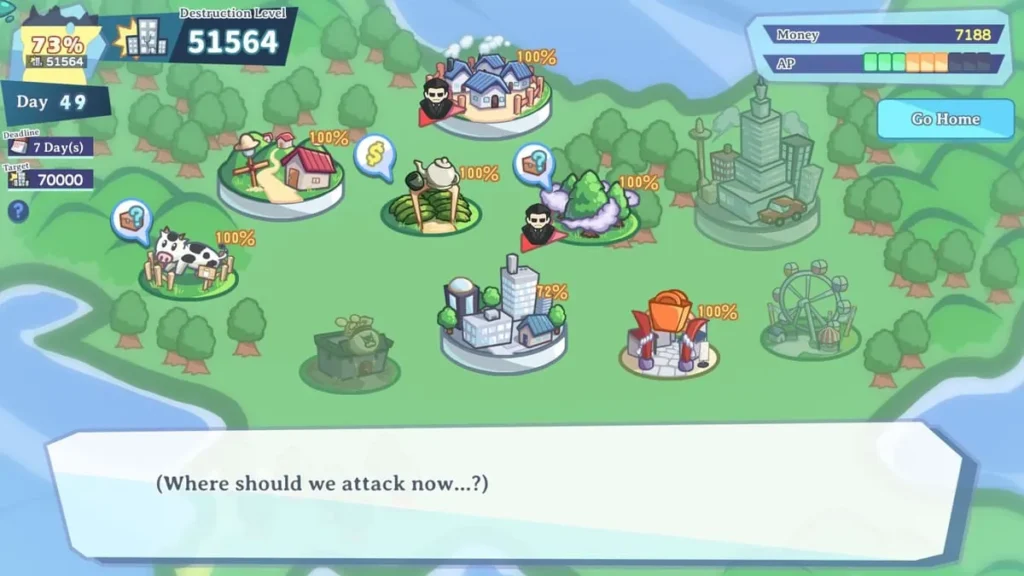
At its core, Kaiju Princess is a clock. ⏰ Each in-game day, you and your colossal roommate wake up with a full tank of energy. This energy is the currency for everything. Want to scrub the bathroom? That’s energy. Feel like cheering up your princess with a chat or a gift? Energy. Need to head out to a temp job to earn some cash? You guessed it—energy. And, of course, embarking on a city-levelling rampage to meet your destruction quota? That’s a major energy investment.
This creates a deliciously tense daily task management gameplay loop. You can’t do it all. You must choose. The game brilliantly ties every system together through this one dwindling meter. Money, earned from jobs or successful destruction, is used to buy items. These items can restore energy, boost mood, or clean the apartment, effectively letting you convert cash into more potential activity. It’s a tight, interlocking economy.
Here’s a breakdown of how a typical day’s energy might be divvied up:
| Activity Category | Example Tasks | Energy Cost | Primary Reward/Outcome |
|---|---|---|---|
| Home Maintenance | Cleaning the kitchen, taking out trash, washing windows | Low to Medium | Prevents “Cleanliness” stat from decaying; avoids mood penalties for a filthy home. |
| Princess Care | Conversation, giving gifts, playing games | Medium | Increases “Mood” stat; high mood can lead to bonuses or unlock special interactions. |
| Income Generation | Working a temp job (Office, Construction, etc.) | High | Earns Money; essential for buying food, gifts, and crucial utility items. |
| Destruction Quota | Traveling to a district, selecting a target, attacking | Very High | Earns Money & fulfills the daily destruction quota; failure has consequences. |
| Personal Care | Making a meal, showering (for you, the manager) | Low | Small stat boosts or prevents your own efficiency from declining. |
The first rule of Kaiju Club: Your energy bar is a lie. It pretends to be just for you, but it’s really the lifeblood of your entire operation. Spend it wisely.
The strategic gameplay decisions start the moment you open your eyes. Do you spend a little energy on quick cleaning to get a small mood boost from a nicer home, saving more for a big attack later? Or do you ignore the mess, work a full shift for cash, and buy a cleaning service item to solve the problem without energy? This constant cost-benefit analysis is where Kaiju Princess truly shines as a management game progression simulator. You’re not just managing tasks; you’re managing a fragile ecosystem of needs, resources, and time.
Balancing Multiple Objectives and Priorities
This is where I failed spectacularly at first. I treated every demand with equal urgency. The apartment is dirty? Clean it! The princess is sighing? Comfort her! The city is looking smugly intact? Smash it! This “yes-man” approach is a one-way ticket to burnout (for both you and the game character). 😫
Kaiju Princess teaches you, sometimes brutally, that not all priorities are created equal. The game imposes a hidden hierarchy, and learning it is key to survival. Let me tell you a quick story: I once focused entirely on making my princess ecstatic. We chatted, I bought her silly gifts, the apartment sparkled. But I ignored the destruction quota for two days. The consequence wasn’t just a failed mission—the princess’s mood plummeted because her innate desire for chaos was unmet. My perfect strategy backfired completely.
Through trial and error, a successful hierarchy emerges:
- The Non-Negotiable: The Destruction Quota. This is your primary job. Meeting it keeps the narrative moving and, crucially, keeps the princess’s base contentment stable. An unmet quota is the fastest way to trigger a negative spiral.
- The Foundation: Basic Home & Mood Maintenance. You don’t need a spotless penthouse or a perpetually joyous princess. You need to prevent either stat from hitting critical “red” zones, which impose severe penalties on everything else. A little cleaning and care goes a long way.
- The Engine: Income Generation. You need money to buy the items that make life easier. The strategic gameplay decisions here are huge: is a high-energy, high-paying temp job better than a shorter, lower-paying one that leaves energy for a direct attack (which also pays)? Early on, jobs are vital. Later, efficient destruction becomes a better moneymaker.
- The Optimization: Advanced Care & Upgrades. Once the basics are covered, then you can focus on deep-cleaning the apartment for a bigger mood bonus, or investing in expensive gifts to unlock special scenes. This is the rewarding “thriving” phase, not just surviving.
This balancing act is the game. The time management game mechanics force you to constantly ask: “What is the most efficient use of my next 10 energy points?” Sometimes, the correct answer is to do nothing that costs energy—maybe you just check the shop for a useful item on sale, or you end the day early to reset. That’s a valid strategic gameplay decision!
Progression and Difficulty Curve Throughout the Game
The game difficulty curve in Kaiju Princess is a fascinating bell curve. It starts surprisingly steep, eases into a satisfying plateau of mastery, and can, if you let it, become repetitive in the very late game. This journey is intrinsically linked to your understanding of its systems.
The Punishing Early Game: Your first playthrough is a struggle. 🧗 You have little money, no useful items, and no intuition for the priority hierarchy. You’ll likely miss quotas, suffer bad moods, and feel like you’re constantly putting out fires. This phase is all about survival and learning patterns. The management game progression here is about knowledge, not stats.
The “Aha!” Moment & Mid-Game Mastery: This is where the game opens up and becomes, as many have said, ‘quite decent’ and deeply satisfying. You understand that money should often be spent on energy-restoring food or cleaning kits to multiply your effective daily energy. You learn which temp jobs offer the best energy-to-cash ratio. You develop a daily routine. Perhaps you clean one room and have one nice chat in the morning, work a shift to fund an energy snack, then embark on your attack with renewed vigor. You’ve internalized the daily task management gameplay loop. The difficulty melts away because you’re now playing with the systems, not against them.
The Late-Game Plateau: Once you’ve optimized your routine and have a comfortable bankroll, the challenge shifts from survival to completionism or role-playing. The core loop remains, but the pressure lessens. For some players, this can feel repetitive, as the tense resource management simulation gives way to a more predictable cycle. The late game is about enjoying the fruits of your labor and witnessing the narrative conclusions you’ve engineered through your earlier choices.
The true progression isn’t just on the screen; it’s in your head. The game doesn’t get easier—you get smarter.
To help you conquer that tough early phase, here are some hard-earned tips for managing the learning curve:
- Your First Goal is a Bankroll: Don’t spend early cash on gifts or luxuries. Save up for items that solve problems without energy, like instant-clean sprays or basic meals. This breaks the initial scarcity cycle.
- Quota is King: Schedule your day backwards from your attack. Ensure you have enough energy left to at least attempt the destruction mission. Everything else is secondary.
- Embrace “Good Enough”: A slightly messy apartment is fine. A princess who is “content” instead of “joyful” is fine. Letting minor stats dip to focus on major goals is not just okay—it’s required.
- Temp Jobs are a Bridge, Not a Lifelong Career: Early on, they’re essential for cash. As your destruction efficiency improves (through practice and maybe better items), their importance fades. Learn to transition your income source.
- The Shop is Your Best Friend: Check it daily. A discounted energy drink or pre-cooked meal can be a game-changer, allowing you to squeeze in one more critical activity.
The genius of Kaiju Princess is that it makes you feel like a brilliant manager not by giving you endless resources, but by teaching you to thrive under strict limitation. The energy system resource allocation is the puzzle, and your growing ability to solve it is the real reward. You move from feeling like a overwhelmed caretaker to a strategic partner in chaos, and that journey—from flailing to flowing—is what makes this resource management simulation so memorably engaging. 🏙️💥👑
Kaiju Princess delivers a solid management simulation experience that successfully combines strategic gameplay with narrative elements. The time management mechanics provide a satisfying challenge during early gameplay, with a learning curve that rewards players who understand task prioritization. While the game’s difficulty eventually plateaus into repetitive phases, the relationship-building aspects and character interactions offer motivation to continue playing. The blend of resource management, daily task balancing, and character development creates an engaging experience for players interested in simulation games. If you enjoy management titles with unique premises and don’t mind the game’s specific content style, Kaiju Princess offers dozens of hours of gameplay with mechanics that keep you engaged through the mid-game phases. Consider your tolerance for repetitive late-game content and your interest in the relationship-building mechanics when deciding if this title matches your gaming preferences.