
Karryn’s Prison Screenshots











Karryn’s Prison review
Explore the strategic elements, corruption system, and prison management mechanics
Karryn’s Prison stands out as a unique title that seamlessly integrates adult narrative elements with strategic gameplay mechanics. As the new Chief Warden, players navigate complex prison management while making choices that directly impact character development and story outcomes. This guide explores the core systems that make the game distinctive, from its innovative corruption mechanics to its strategic battle system. Whether you’re interested in understanding the gameplay depth or the narrative choices available, this comprehensive overview covers the essential elements that define the experience.
Core Gameplay Systems & Mechanics
Let’s be honest: the first time you boot up Karryn’s Prison, it can feel overwhelming. 😅 You’re suddenly the warden of a facility filled with unruly inmates, and you have to manage everything from their work schedules to their… personal grievances. I remember my first playthrough, thinking I could just power through battles and ignore the management side. My prison descended into absolute chaos within a week. It was a mess of fights, escapes, and a completely demoralized staff. That’s when it clicked: Karryn’s Prison gameplay mechanics are a brilliant, interwoven tapestry where every decision ripples outward. This isn’t just a game with separate parts; it’s a deep prison management strategy game fused with a strategic RPG battle system, all guided by your character development choices. Let’s break down exactly how does Karryn’s Prison gameplay work at its core.
Prison Management & Strategic Decision-Making
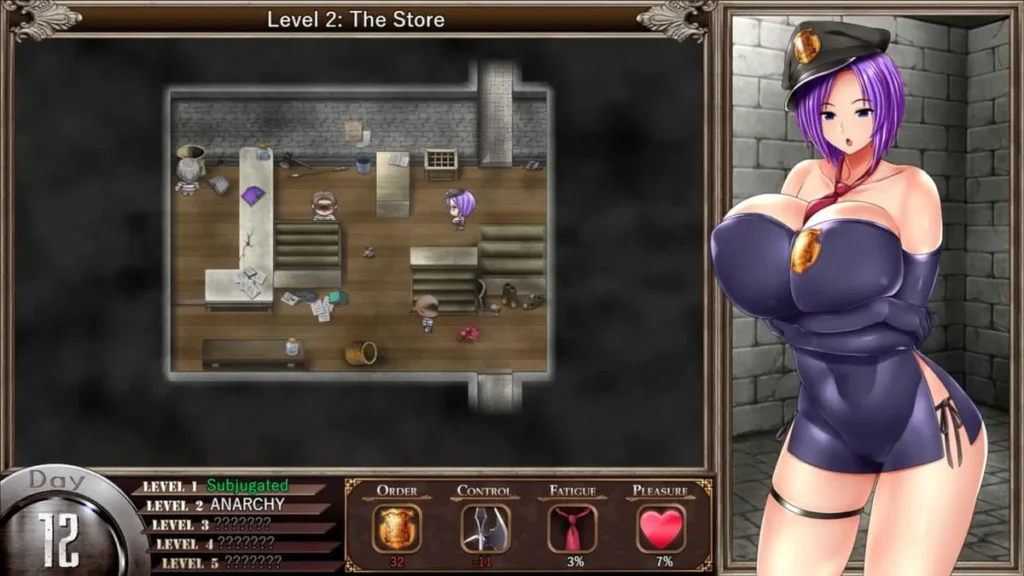
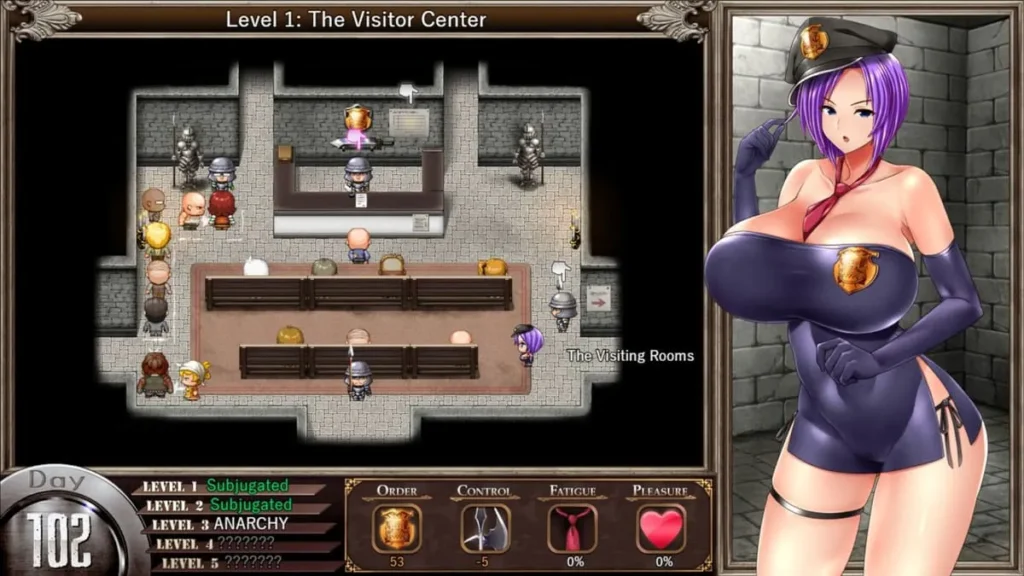
Think of your prison as a living, breathing engine—and you are both its architect and its mechanic. 🏗️ This isn’t a passive sim; it’s an active, daily puzzle where your strategic choices directly fuel or hinder your progress. The core loop is deceptively simple: assign inmates to jobs (like cooking, cleaning, or crafting), manage facility upgrades, and handle random events. But the magic—and the challenge—lies in the details.
Every inmate has stats (Strength, Dexterity, etc.) and traits. Putting a strong but lazy inmate on cleaning duty might get the floors mopped, but he’ll also complain loudly, lowering morale for everyone around him. I learned this the hard way by assigning “Brutus,” a mountain of a man with a short fuse, to the kitchen. The food quality plummeted, and soon I had a cafeteria brawl on my hands. Your job is to play to their strengths while mitigating their weaknesses, creating a delicate ecosystem of productivity.
But it’s not just about labor. The prison management strategy game aspect shines in your interactions. Inmates will make requests, start fights, or try to bargain with you. Do you grant a privilege to a influential inmate to keep the peace, asserting your authority as a strict warden? Or do you deny it, risking a rebellion but potentially gaining the respect of others for your firmness? Each choice is a small stone dropped into the pond of your prison’s culture.
Pro Tip: Don’t just assign jobs randomly. Early on, use the “Library” job to identify inmate stats and traits quickly. Knowledge is power, and knowing who you’re dealing with is the first step to effective management.
This daily management is your primary resource engine. The gold and materials you earn from prison industries fund everything: better equipment for your guards (and yourself), facility expansions, and crucial items. Neglecting this side of Karryn’s Prison gameplay mechanics means you’ll be chronically under-equipped for the battles that are inevitably coming. It’s all connected.
Battle System & Combat Mechanics
When diplomacy and management fail—and they will—the strategic RPG battle system takes center stage. This is where Karryn’s Prison truly separates itself from the pack. Forget mindless clicking; every encounter is a tactical puzzle. 🧠⚔️
Battles are turn-based and revolve around a Stamina system. Every action, from a basic attack to a special skill, costs Stamina. Managing this pool is the key to victory. You can’t just spam your strongest move; if you drain your Stamina, you’ll be left vulnerable and unable to act, which is often a recipe for a very bad time. I once burned all my Stamina trying to finish off a tough inmate early, only to be completely helpless against his two friends. It was a swift and educational defeat.
Your arsenal includes Attack skills, Guard skills, and unique “Special” skills. The genius of the system is that your choices in battle have immediate narrative and mechanical consequences. Using certain moves or ending a battle in a specific way can influence an inmate’s attitude toward you, alter their corruption level (more on that soon), and unlock new dialogue or events. For example, defeating an inmate with a non-lethal “Subdue” skill might leave them respectful and more compliant in daily management, while brutally overpowering them could make them fearful but secretly more rebellious.
The system also incorporates positioning and multiple opponents. You’re often outnumbered, requiring you to decide whether to focus fire on the biggest threat or use area-of-effect skills to control the crowd. Your equipment, which you craft and upgrade using prison resources, plays a huge role. Finding the right balance between offense, defense, and stamina regeneration through your gear is a core part of the strategic RPG battle system.
This is where the game’s unique fusion is most apparent. The adult-themed elements aren’t just cutscenes; they are often direct results of battle outcomes, woven into the mechanics of losing, winning, or choosing certain actions. It makes every engagement feel consequential, not just for your HP bar, but for the entire story of your prison.
Corruption Mechanics & Character Development
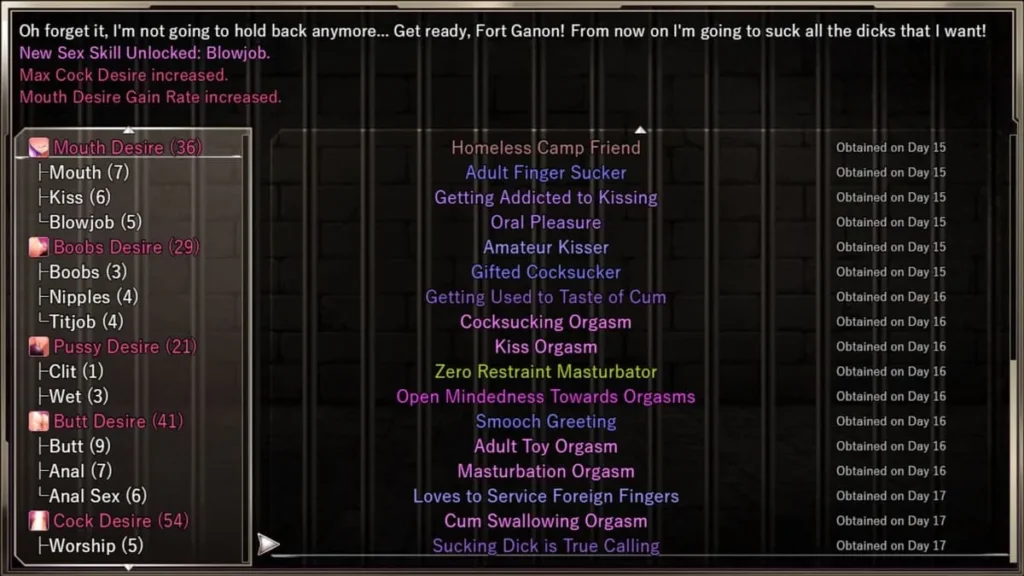
Now, let’s talk about the elephant in the room: the corruption system mechanics. This is the pulsating heart of the game, the system that ties everything together. It’s not a simple “good vs. evil” meter. Think of it as a measure of Karryn’s resilience, her boundaries, and her evolving relationship with power and the inmates. 📊💫
Your character development choices in and out of battle directly feed this system. It increases through specific story events, losing battles in certain ways, or even choosing particular dialogue options when dealing with inmates. The critical thing to understand is that corruption isn’t just a narrative flag—it’s a core gameplay mechanic. As Karryn’s corruption level rises, she unlocks new, more powerful skills and abilities in battle. These can be game-changers, offering ways to control fights that were previously impossible.
However, there’s a trade-off. Higher corruption can also come with debuffs or make certain management interactions more difficult. It might lower your base stats in some areas or change how inmates perceive and react to you. You’re not just choosing a “path”; you’re actively sculpting your character’s capabilities. Do you resist corruption to maintain a firm grip on your prison’s discipline, relying on pure skill and management? Or do you embrace its power to gain an edge in combat, navigating the complex repercussions in your daily warden duties?
This is the brilliance of Karryn’s Prison gameplay mechanics. The corruption system mechanics ensure that no two playthroughs are alike. My “low-corruption” run was a tense struggle of resource management and precise combat, where I played a stern, unyielding warden. My “high-corruption” run felt completely different—a chaotic, power-fueled campaign where battles were easier, but keeping my prison from descending into anarchy was a constant, thrilling challenge. The system answers the question of how does Karryn’s Prison gameplay work by making your personal journey the central variable.
Difficulty Levels and Game Modes
Karryn’s Prison understands that players seek different challenges. The difficulty levels and game modes let you tailor the experience to your desired blend of strategy and narrative. 🎮⚖️
You have three main difficulties: Easy, Normal, and Expert.
* Easy reduces the pressure of prison management and makes battles more forgiving, perfect for focusing on the story and learning the intertwined corruption system mechanics.
* Normal provides a balanced challenge where both management and combat require attention. It’s the recommended way to experience the game’s intended tension.
* Expert is for masochists and master strategists. Inmate stats are higher, resources are scarcer, and mistakes are punished severely. It truly tests your mastery of the prison management strategy game and the strategic RPG battle system.
The choice deeply affects your character development choices. On Expert, you might be forced to make pragmatic, corrupting decisions just to survive an early-game battle, dramatically altering your path. On Easy, you have more freedom to role-play a specific type of warden from the start.
Here’s a breakdown of how they compare:
| Difficulty | Management Pressure | Combat Challenge | Corruption Gain | Recommended For |
|---|---|---|---|---|
| Easy | Relaxed. Fewer negative events, slower decay. | Forgiving. Enemy stats are lower. | Standard rate. Easier to control your path. | New players, story-focused players, or those learning the core loops. |
| Normal | Balanced. Requires active attention and planning. | Fair but demanding. Requires understanding of battle mechanics. | Standard rate. Choices feel impactful. | Most players. The intended experience for strategy and narrative balance. |
| Expert | Intense. Constant crises, tight resources. | Brutal. Every battle is a major tactical test. | Can be faster, as losing battles becomes more common. | Veterans seeking the ultimate test of their strategic mastery. |
Frequently Asked Questions
How do my mechanical choices in battle actually affect the story and character relationships?
Every inmate has a hidden relationship and attitude score that is altered by how you interact with them. Using non-lethal takedowns, granting their requests, or defeating them in specific ways can shift them from “Hostile” to “Neutral” or even “Friendly.” This opens up unique dialogue trees, side events, and can even make them more productive workers or unlikely allies in future conflicts. The game is constantly tracking these behind-the-scenes numbers.Is it better to resist or embrace the corruption mechanics on a first playthrough?
There’s no “better” way—that’s the point! But for a first run, I recommend not fighting it too hard. Let the story happen naturally. If you lose a battle, see where that narrative branch leads. The corruption system mechanics are designed to provide new tools and content, so embracing it can actually give you a more complete view of the game’s rich systems and story on your first go.Can I focus solely on being a good prison manager and ignore combat?
Unfortunately, no. Conflict is a core part of the narrative and gameplay loop. The strategic RPG battle system is unavoidable. However, on easier difficulties and with smart management (keeping inmate morale high and needs met), you can minimize the frequency and severity of fights. Think of combat as the final, necessary tool in your warden’s belt for enforcing order.How long does it take to see the consequences of my character development choices?
Some consequences are immediate, like a skill unlock after a corruption threshold. Others are delayed. An inmate you were harsh with might plan a revenge event days later. The game uses a long-term ledger, making your prison feel like a real, reactive world. Major narrative branches tied to corruption or key relationships typically become evident in the mid-to-late game.
Ultimately, the genius of Karryn’s Prison is that it never lets you forget that every system is connected. Your management decisions set the stage for your battles. Your performance in battle dictates your resources and corruption. Your level of corruption unlocks new management and battle options. It’s a stunning, complex circle of gameplay that rewards careful thought, adaptation, and role-playing. Whether you’re a strict disciplinarian or a cunning power-seeker, the game’s mechanics are there to support your story, making each warden’s journey uniquely challenging and deeply engaging.
Karryn’s Prison demonstrates how strategic gameplay and mature narrative can integrate meaningfully rather than exist as separate components. The game’s strength lies in its corruption mechanics that track character transformation, its strategic battle system where player choices matter, and its prison management framework that creates genuine decision-making moments. By combining these elements, the title offers players a unique experience where mechanical choices directly influence narrative outcomes and character relationships. Whether you’re drawn to strategic gameplay, narrative depth, or the innovative integration of both systems, understanding these core elements enhances appreciation for the game’s design philosophy. For players seeking a title that respects their intelligence and agency, Karryn’s Prison delivers a sophisticated approach to interactive storytelling.