My Maid Dreams of Electric Sheep
Play My Maid Dreams of Electric Sheep
My Maid Dreams of Electric Sheep Screenshots


My Maid Dreams of Electric Sheep review
Explore the dystopian life simulation with android companions and branching storylines
My Maid Dreams of Electric Sheep is a story-driven sandbox life simulation set in a dystopian future where emotions are forbidden and controlled by the ‘gray pill.’ Players take on the role of a disobedient protagonist navigating a desolate world alongside Model A/KO M-1999, a loyal android maid designed for your happiness and well-being. This unique game blends narrative depth with simulation mechanics, offering multiple endings, character relationships, and meaningful choices that shape your journey. Whether you’re interested in the game’s compelling storyline, character interactions, or gameplay systems, this guide covers everything you need to know about experiencing this atmospheric dystopian adventure.
Understanding the Game’s Core Mechanics and Setting
Let’s be honest: most life sims are about finding peace. You water your plants, befriend the locals, and build a cozy little world. My Maid Dreams of Electric Sheep throws that handbook out the window and sets it on fire. 🚫🔥 This isn’t about finding peace; it’s about discovering if life is worth living at all in a world that has medically pathologized sadness itself. Your journey begins not with a hopeful sunrise, but with a pen in hand, writing a bucket list after a failed suicide attempt. Cheerful, right?
Welcome to the core experience. This dystopian game setting is the bleak, oppressive canvas upon which every other mechanic is painted. Feelings aren’t just inconvenient here; they’re considered a sickness, a glitch in the system to be corrected. The air is thick with silent desperation, and your character’s apartment feels less like a home and more like a holding cell for a malfunctioning human. This profound premise transforms every mundane task into a loaded question about the value of existence.
So, what are you actually doing? This is where the genius of its story-driven sandbox gameplay comes in. You’re not following a linear plot from A to B. Instead, you’re given a fragile life to manage within a rigid, uncaring city. You decide how to spend your days: working soul-crushing jobs, interacting with androids and fellow broken humans, or simply staring at the wall as your depression and mental health mechanics tick downward. The “sandbox” is your daily routine, and the “story” is what blooms—or withers—within it.
What Makes This Life Simulation Unique in the Dystopian Genre
Most games in the dystopian genre are about grand rebellion, taking down corrupt governments with plasma rifles. My Maid Dreams of Electric Sheep is different. Its rebellion is intimate, personal, and heartbreakingly quiet. The life simulation game mechanics aren’t about farming or decorating; they’re about the grueling work of staying alive when every part of you wants to shut down.
The world operates on a chilling principle: emotional control. Citizens are encouraged—or forced—to take the “gray pill,” a pharmaceutical pacifier that numbs the soul to a manageable, gray-scale existence. 🧪 This isn’t just lore; it’s a core pressure that influences your choices. Do you conform and swallow the numbness to get by, or do you resist, clinging to your painful, vibrant humanity at great personal cost? This conflict between feeling and void is the engine of the entire experience.
I remember my first in-game week. I was so focused on keeping my job at the processing plant that I took the gray pill every morning, thinking it was the “smart” play. My survival meters were stable, but something was wrong. The music became flatter, the colors desaturated, and my interactions with my android maid, Unit A-17, felt hollow. I was “succeeding” at the system’s game, but I was erasing the very person I was trying to save. That’s the unique horror this dystopian game setting delivers: the most dangerous enemy isn’t a tyrannical robot, it’s the allure of comfortable nothingness.
Managing Your Character’s Survival: Stamina, Hunger, and Mental Health
Forget zombies or mutants. In this world, your greatest adversaries are your own body and mind. The character survival systems are a brutal, constant triage between three pillars: Stamina, Hunger, and Mental Health (which the game often frames as “Stability” or “Depression”). Let me tell you, letting any one of these hit zero has consequences far worse than a “Game Over” screen.
- Stamina is your physical fuel. Every action—working, cleaning your apartment, even taking a long walk—drains it. Run it too low, and you’ll pass out, wasting precious hours or even ending up in a corporate clinic that drains your funds.
- Hunger is straightforward but relentless. Food costs money, and money requires working jobs that crush your spirit. It’s a vicious cycle that perfectly mirrors the struggle of living with depression in our world.
- Mental Health is the star of the show. This is your depression and mental health mechanics in action. It’s affected by everything: seeing something beautiful might give it a tiny, fleeting boost, while a harsh word from a stranger, a dreary day, or the soul-crushing boredom of a data-entry job can send it plummeting. 🧠
The real gameplay lies in juggling these. You might have enough money for a good meal (helping Hunger), but cooking it costs Stamina. Is it worth it? Or do you eat bland nutrient paste and save your energy to visit the city park, which might help your Mental Health? There are no perfect answers, only compromises that shape your character’s story.
Pro Tip: Early on, don’t chase big happiness spikes. Focus on small, sustainable routines. A regular sleep schedule, even just making a simple cup of tea, can provide tiny, crucial buffers against the downward spiral of your Mental Health meter.
To see how these systems intertwine, let’s break them down:
| Survival Metric | How It Drops | Primary Risks | Positive Interactions |
|---|---|---|---|
| Stamina | Performing work tasks, walking long distances, skipping sleep. | Passing out, failing job minigames, being unable to engage in social events. | Sleeping, consuming stimulants (short-term), sitting down to rest. |
| Hunger | Elapsed time, performing physical actions. | Stamina drains faster, severe penalties to all action success rates. | Eating any food. Higher-quality food provides longer satiety and small Mental Health bonuses. |
| Mental Health (Stability) | Stressful jobs, negative social outcomes, gloomy environments, ignoring personal interests. | Catastrophic failure in story events, loss of access to certain narrative branches, triggering a “crisis” event. | Meaningful social connections, engaging with art/music, completing personal bucket list items, petting the (electric) sheep. |
This table shows the brutal economy of existence in the game. Notice how Mental Health is the only one with “catastrophic” risks tied directly to the narrative? That’s intentional. Your physical body can be maintained, but your mind is the true battlefield.
The Role of Daily Interactions and Story Events in Progression
Here’s where the story-driven sandbox gameplay truly sings. Your progress isn’t measured in experience points or skill trees, but in the fragile, evolving relationships you build and the personal milestones you achieve. The daily interaction systems are your primary tool.
Every day, you can choose to speak with the other residents of your apartment block, your coworkers, or your assigned android companion. These aren’t just flavor text. Every conversation is a potential branching narrative choice. Do you vent your frustrations to your neighbor, risking burdening them but potentially deepening your bond? 🗣️ Or do you give the socially acceptable, gray-pill-approved response, keeping things smooth but sterile? I once snapped at my android maid for her relentless, cheerful efficiency. Instead of a simple apology, it triggered a long, quiet story event where she questioned her own programming, leading to one of the most poignant subplots in my playthrough.
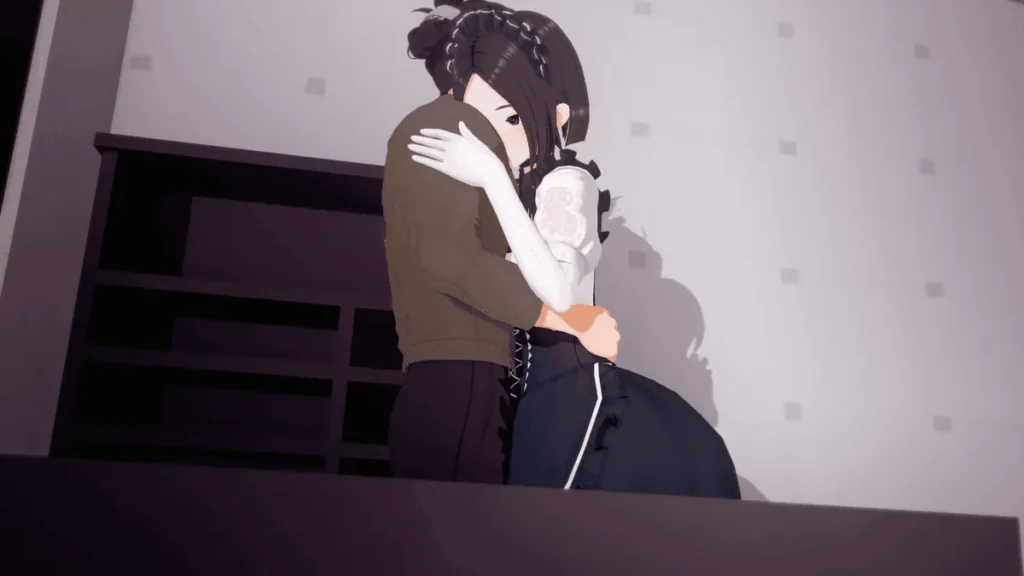
These interactions build up to fully animated story events. One moment you’re playing a mundane minigame like sorting circuit boards at work (a brilliant way to simulate dystopian drudgery), and the next, the screen fades into a beautiful, hand-animated cutscene. A coworker breaks down in the break room. You find a stray data-log containing someone’s lost poetry. Your maid stares a little too long at a synthetic sunset. 🌅
These events are the heartbeat of the game. They’re where your choices crystallize. The game will often present you with a crucial decision: encourage your friend to seek illicit therapy, report them for emotional instability, or simply look away. There is no “Paragon” or “Renegade” meter. There’s only cause and effect, rippling through your network of relationships and directly locking or unlocking paths toward the game’s multiple endings.
This fusion is key. The grind of the daily interaction systems—making coffee, going to work, managing your meters—builds the realistic weight of daily life. The story events then puncture that routine with moments of raw, meaningful choice. You earn those narrative payoffs through the struggle of living. It makes the emotional highs and lows feel deserved, not scripted.
Ultimately, My Maid Dreams of Electric Sheep uses its life simulation game mechanics not as a goal, but as a language. It speaks in the grammar of exhaustion, hunger, and despair to tell a story about the value of a single, difficult life. Your management of the character survival systems directly writes the story. Will you succumb to the gray, find a way to forge genuine connection in a world that forbids it, or carve out a different path entirely? Your branching narrative choices in every conversation and every silent moment of resistance will decide not just an ending, but the meaning of the entire journey. In this profound dystopian game setting, the most radical act you can perform is simply to care, both for yourself and for the other “malfunctioning” souls around you.
My Maid Dreams of Electric Sheep stands out as a thoughtfully crafted life simulation that merges narrative depth with meaningful gameplay mechanics. The game’s dystopian setting, where emotions are suppressed and controlled, creates a unique backdrop for exploring what it means to be human through your interactions with an android companion and other characters. From managing survival mechanics like stamina and depression to building relationships that branch into multiple endings, every system serves the game’s central themes. Whether you’re drawn to the compelling storyline, the character-driven narrative, or the immersive simulation mechanics, this game offers a distinctive experience that challenges players to make meaningful choices in a world designed to strip away humanity. As the developer continues expanding content and adding new story events, there’s always more to discover in this atmospheric dystopian world.